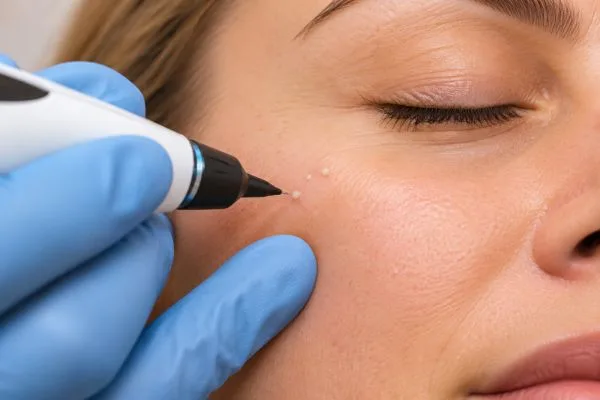
Milia Removal Hampton Wick Home-Based Skin Treatment

Small White Bumps on Your Skin? Explore Your Milia Removal Options with LA LIPO

Noticed tiny white or cream-coloured bumps around your cheeks, forehead, or nose that don’t seem to go away?
They could be milia. These small, harmless cysts sit just beneath the skin’s surface and can sometimes remain for months.
Although milia aren’t usually a medical concern, some people prefer to have persistent ones removed for cosmetic reasons.
At LA LIPO, we offer home-based lesion treatment services in selected UK locations. Considering milia removal? We can discuss your concerns, explain the available options, and determine whether an appointment with one of our practitioners is appropriate.
Not every white bump is milia, and some skin changes need a medical assessment before we can consider cosmetic treatment.
Milia Removal Treatment Hampton Wick

What Are Milia?

Milia are tiny cysts containing keratin, a protein naturally found in the skin.
They usually appear as small, firm, white or yellowish bumps, often measuring only a few millimetres across.
Unlike spots or whiteheads, milia aren’t caused by the same process as acne. They develop when keratin becomes trapped beneath the skin’s surface.
Milia are generally harmless and don’t require treatment unless someone wants them removed.
Some disappear naturally, while others can persist for considerably longer.

Where Can Milia Appear?

Milia are particularly common on the face, although they can develop elsewhere.
Areas where they frequently appear include:
  • Cheeks
  • Forehead
  • Nose
  • Around the eyes
  • Eyelids
  • Chin
The location of a lesion matters when considering removal. Skin around the eyes is especially delicate, and treatment in this area may require assessment by an appropriately qualified medical professional.
LA LIPO will need to establish whether the location and appearance of your skin concern fall within the scope of its available services.

What Causes Milia?

Milia form when keratin becomes enclosed in a small cyst beneath the skin.
They can develop without an obvious cause, although certain types are associated with previous skin damage or inflammation.
Possible contributing factors include:
  • Skin healing following an injury or burn.
  • Certain blistering skin conditions
  • Previous skin procedures
  • Long-term use of some topical medications
  • Changes associated with skin damage
Milia can also appear without any identifiable trigger.
Having milia doesn’t mean your skin is dirty or that you’ve been following the wrong skincare routine.

Can Milia Be Removed?

Yes. Established methods exist for removing persistent milia, though not every lesion needs treatment.
Depending on the location, size and diagnosis, a suitable professional may recommend a controlled extraction technique or another procedure.
The way milia are removed depends on their size, location, and the type of treatment your practitioner is qualified to carry out. Afterwards, you may notice some redness or irritation. There is also a risk of infection, changes in skin colour, or scarring, which you should discuss before treatment.
A consultation should explain the proposed method, expected healing and possible complications before you decide whether to proceed.

What Happens During a Milia Removal Consultation?

1. Discussing Your Skin Concern

Your practitioner will ask about the bumps you’ve noticed, including how long they’ve been present and whether they’ve changed.
You should also mention any previous skin conditions, relevant medical history, medications, or healing problems.

2. Assessing Suitability

We will consider the location and appearance of the lesions.
If the diagnosis is uncertain, or some features need medical investigation, cosmetic treatment should not proceed until appropriate assessment has taken place.
 

3. Explaining Your Options

If the lesions are confirmed as milia and treatment is suitable, the practitioner will explain the available removal method, possible risks and likely aftercare. You can ask questions before deciding whether to go ahead.


4. Treatment and Aftercare

Where treatment is suitable, you may be able to proceed after the assessment.
Your practitioner should explain what to expect afterwards, including how to care for the treated skin and which symptoms would require further advice.


Milia Removal at Home with LA LIPO

Travelling to an appointment isn’t always convenient, particularly when you’re arranging treatment around work, family or other commitments.
LA LIPO provides selected skin treatment services in customers’ homes, allowing suitable appointments to take place in a familiar, private setting.
For milia enquiries, our team can discuss your location and explain whether we can provide an appropriate home-based service.
Before arranging treatment, it’s important to assess the skin concern and whether we can manage it safely within the service offered.
Some lesions may require examination by a GP, dermatologist, or other medical professional.

Does Milia Removal Hurt?

You may feel some discomfort during milia removal, though this varies depending on where the bumps are and how they’re treated.
Some people notice a brief stinging or sharp sensation. Areas with thinner, more delicate skin, such as around the eyes, need particular care.
Before going ahead, your practitioner will talk you through the treatment so you know what to expect.

What Happens After Milia Removal?

The treated area may look slightly red or irritated afterwards. Some techniques can also leave a small superficial wound or scab while the skin heals.
Aftercare depends on the procedure performed.
You may be advised to keep the area clean, avoid picking at the skin and temporarily avoid certain skincare products.
Follow the specific instructions your practitioner provides, and don’t apply products or exfoliants to healing skin without advice.

Are There Any Risks?

Your skin may look a little red or feel tender after milia removal, especially where the bumps were treated.
You might also notice:
  • Mild swelling around the treated area
  • Temporary irritation or sensitivity
  • Small scabs as the skin heals
  • Changes in skin colour
  • Infection or scarring
  • Small scabs or crusting
  • Infection
  • Changes in skin pigmentation
  • Scarring
Not everyone experiences these effects, but it’s important to understand the possible risks before deciding whether to have treatment.
If you notice worsening pain, spreading redness, discharge, or other concerning symptoms after treatment, have a healthcare professional assess them.

Can Milia Come Back?

Removing an existing milium doesn’t prevent new milia from developing.
Some people experience only one or two lesions, while others develop them repeatedly.
There isn’t a guaranteed way to prevent every type of milia.
Gentle skincare and appropriate sun protection can support overall skin health, but no skincare routine can guarantee prevention of milia.

Why Contact LA LIPO?

At LA LIPO, we understand you may want to explore cosmetic treatment without travelling to a clinic.
Our home-based service makes suitable appointments more convenient while keeping individual assessment and informed decision-making at the centre of the process.
When you enquire, our team can explain:
  • Whether our service is available in your area
  • What assessment is required
  • Whether the skin concern is suitable for the service offered
  • What the proposed procedure involves
  • Applicable costs and appointment arrangements
If your skin concern requires medical investigation or treatment outside our service, we’ll explain why a different route may be more appropriate.

Frequently Asked Questions About Milia Removal Hampton Wick

Find answers to some of the most common questions about Milia Removal Hampton Wick, including how it works, what to expect, results and suitability.

It’s easy to mistake milia for whiteheads, especially when they appear as tiny white bumps on your face. However, they’re not quite the same thing.
Milia are small cysts that form when keratin becomes trapped beneath the skin. Whiteheads, on the other hand, are a type of acne caused by blocked hair follicles.
They may look alike, but they aren’t treated in the same way. If you’re unsure what the bumps are, it’s worth having them checked before considering removal.
Yes, milia can clear up on their own, although there’s no set timescale.
They’re particularly common in babies and often disappear without treatment. In adults, they can be more persistent, sometimes lasting several months or longer.
Because milia are usually harmless, there’s no need to rush to have them removed. If they’re not causing you any concern, leaving them alone is often perfectly reasonable.
Trying to squeeze, pierce or scrape milia at home isn’t recommended.
Unlike ordinary spots, milia don’t usually respond to squeezing. Attempting to remove them yourself can damage the surrounding skin and increase the risk of infection or scarring.
Milia commonly develop beneath and around the eyes.
However, the skin in this area is delicate, and not every removal technique is appropriate.
Lesions close to the eye or on the eyelid may require assessment and treatment by a dermatologist, ophthalmologist or another appropriately qualified medical professional.
An individual milium may be removed successfully, but new milia can develop afterwards.
Removal shouldn’t be described as a permanent solution to all future milia.
Scarring is a possible complication of skin lesion removal. The risk varies by procedure, location, skin characteristics, and healing response.
Healing time depends on the technique used and the area treated.
Some people experience only temporary redness, while other procedures may leave a small area of crusting that takes longer to settle.
Your practitioner should explain the expected healing process for your particular treatment.
Yes. Milia can appear on different skin types, including sensitive skin.
If your skin is easily irritated, you have an active skin condition, or you’ve previously experienced problems following cosmetic procedures, discuss this before treatment.
No. Milia aren’t an infection and can’t be passed from one person to another.
They’re small cysts containing keratin, rather than a contagious skin condition.
Some topical treatments may be considered for certain types of milia, but ordinary skincare products don’t reliably remove established cysts.
Avoid using strong exfoliating products, acids or other treatments around the eyes without appropriate professional advice.
Cryotherapy is one method medical professionals use for selected milia.
However, it isn’t necessarily the preferred method for every lesion, particularly in delicate facial areas.
Whether freezing is appropriate depends on the diagnosis, location, equipment, and the practitioner’s expertise.
Yes. Some milia develop as the skin heals following an injury, inflammatory condition or cosmetic procedure.
These are sometimes described as secondary or traumatic milia.
If you notice new bumps after treatment, seek advice before attempting to remove them.
Arrange medical assessment if a bump is growing, bleeding, changing appearance, becoming painful or failing to heal.
You should also seek advice if you’re uncertain whether the lesion is milia.
A new or unusual growth shouldn’t automatically be treated as a harmless cosmetic concern.
LA LIPO offers selected home-based skin treatment services in parts of the UK.
Contact our team with your location and details of the skin concern. We can explain whether an appropriate service is available and what assessment would be needed before treatment.
The cost depends on the service offered, the number and location of lesions and any assessment or appointment charges.
LA LIPO can explain the applicable price and any additional charges before you agree to treatment.
Contact LA LIPO through our website and tell us where you’re located and which area of skin you’re concerned about.
Our team can explain the next steps, including whether a home-based appointment is available and whether you need a medical assessment first.
Contact LA LIPO About Milia Removal

Ready to Find Out More?

Book a no-obligation consultation to discuss your goals, treatment options and suitability.

Important: Information on this page is for general guidance and doesn’t replace an individual medical assessment. If a skin lesion is changing, unexplained or causing symptoms, seek advice from an appropriate healthcare professional before arranging cosmetic removal.